L’entrave, qui devait se terminer le 15 septembre durera finalement jusqu’au 5 octobre pour la construction de l’écran antibruit. Le détour se fera toujours par le boulevard Jean-Talon.
[Read More ...]
Le jeune homme, alors âgé de 19 ans, avait mystérieusement disparu après une soirée entre collègues.
Le coroner conclut à un décès accidentel puisque le corps n'avait pas de lésion et n'était non plus sous l'emprise d'aucune drogue, dans un rapport qui vient d'être publié.
La date du décès est estimée au 26 mai 2016, une nuit où il faisait plutôt froid. Le pathologiste croit que le décès est attribuable à la noyade. M. Frenette aurait manqué de vigilance en raison d'une combinaison d'hypothermie et d'alcool qu'il avait ingurgité ce soir-là. Il s'est retrouvé dans la rivière Saint-Charles et s'y est noyé.
Pour lire sur le même sujet: Un corps retrouvé dans la rivière Saint-Charles
John Pugh, a creator of trompe l’Oeil optical illusion murals, has said, "It seems almost universal that people take delight in being visually tricked."
He has a point.
Consider the popularity of the infamous "Is That Dress White and Gold or Blue and Black?" debate. Or, the instant success of shows like Westworld or Black Mirror, both of which rely on an audience's obsession with being deceived.
Both of these examples support Pugh's statement -- people enjoy artwork that blurs the line between reality and illusion.
Trompe l’Oeil, a French expression, translates in English to optical illusion. Trompe l’Oeil murals appear to be lifelike and three-dimensional, and are typically displayed on vertical surfaces, like the walls of a building.
If you enjoy optical illusions, take a look at our favorite trompe l’Oeil examples to trick your mind.
1. "Quetzalcoatl" by John Pugh
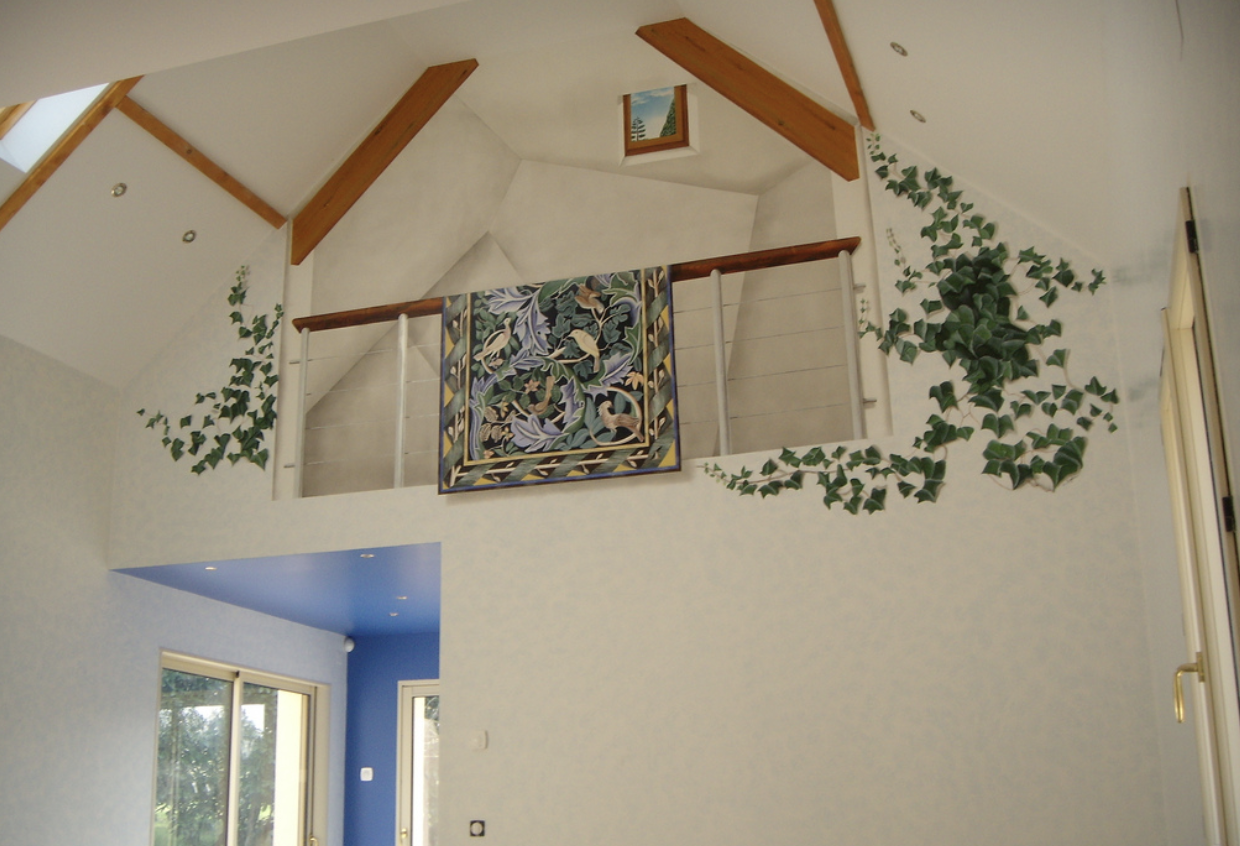
2. "Mezzanine en trompe l'Oeil" by Célia Kogut
3. "Cinema Cannes" by A.FRESCO
4. "Mueller's Waterfall" by Edgar Mueller
5. "Puzzling Realities" by Jenny McCracken
6. "Copenhagen Zoo" by Bates Y&R
7. "Venice, Italy" by Morgan Bricca
8. "Mural for Fontainebleau Hotel" by Richard Haas
9. "Flatiron Building, Toronto" by Derek Besant
10. "Le Radeau de Lampéduse" by Pierre Delavie
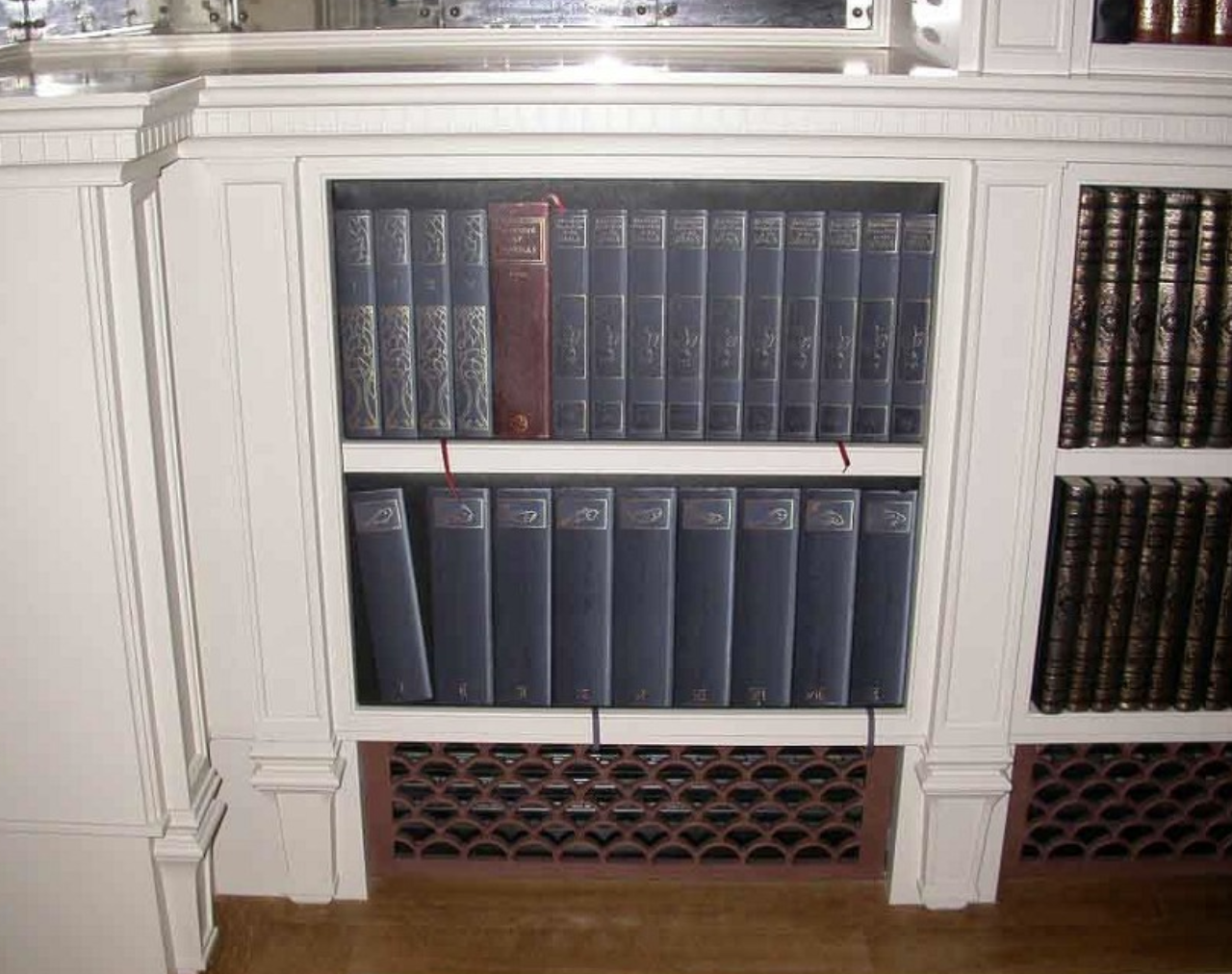
11. "Trompe l'Oeil books" by Paul Czainski
12. "Derelict building" by Nina Camplin
13. "Capri" by Rainer Maria Latzke
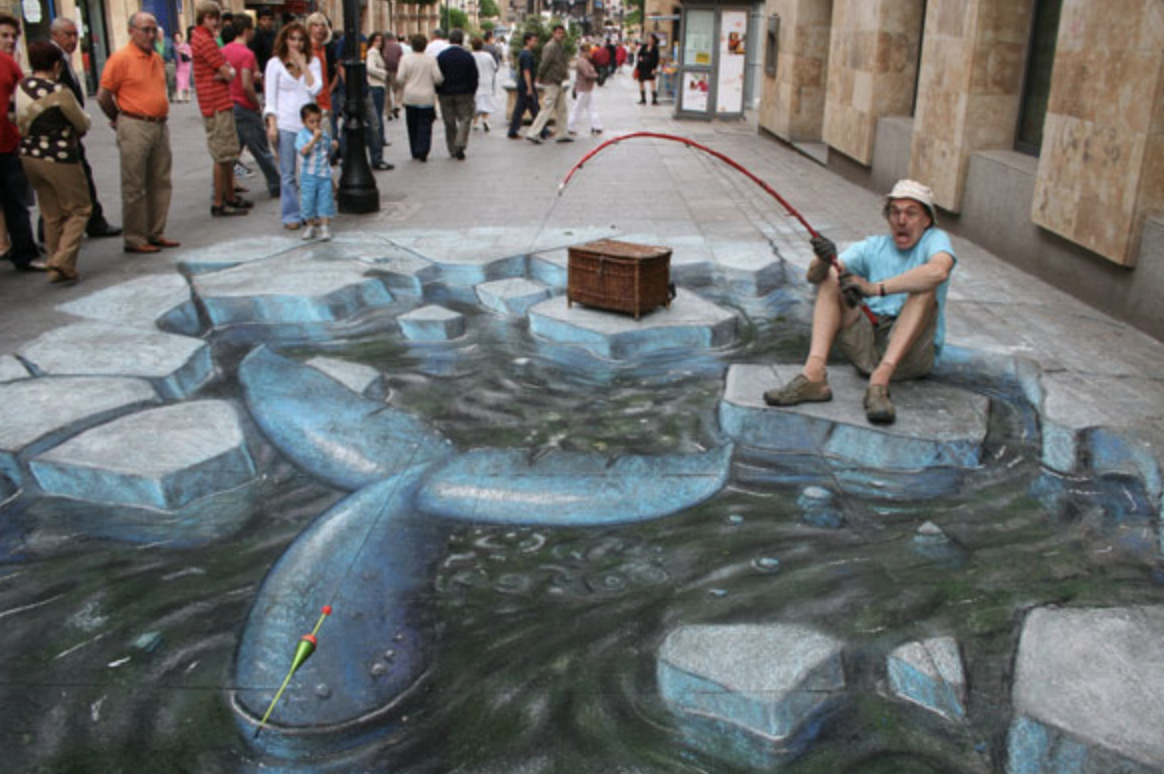
14. "Oh crumbs!" by Julian Beever












Designing window displays is like creating content. If you write a formulaic blog post packed with clichés, it won’t resonate with your audience. Similarly, if you plop a standard mannequin dressed in a seasonal outfit in your window display, it won’t persuade anyone to shop at your store.
Nowadays, no matter what industry you work in, most marketers generally use the same tactics. Almost every brands' creative work blends in with each other, making them unable to grab attention.
To effectively engage people, you must stick out from the crowd. But what’s the best way to do so?
A powerful way to differentiate your brand is by telling compelling stories. Even though it’s a buzzword as old as the advertising industry itself, storytelling is a timeless skill. Neuroscience proves that it’s the best way to capture people’s attention, bake information into their memories, and forge close, personal bonds. We’re programmed to pay our undivided attention to a great story -- that’ll never change.
And for this very reason, we decided to highlight the visual merchandising examples that tell the some of the most captivating stories in retail. These businesses are able to pull their audience into a story and evoke certain feelings and emotions that consumers associate with their brand, driving them to not only visit their store, but also buy their products.
Visual merchandising uses displays, 3D spaces, and floor plans to create an environment that highlights a product’s or service’s appearance, features, and benefits by appealing to one or more of the five human senses, most commonly sight. It’s often used in stores, but it can also be used online.

Image Credit: Pinterest
Even though this exhibit at Seneca College’s Redefining Design doesn’t have any mannequins, it can still tell a vivid story by grouping the perfect elements of a stylish outfit together.
For instance, when you first look at this display, you might start to visualize a suave professional strolling through the airport, on his way to catch a flight for an important meeting. Eventually, this story, which is only told through clothes, wooden boards, and rope, completely pulls you in, making you envision yourself as this suave professional and stimulating your desire to buy the entire outfit.

Picture Credit: Pinterest
Most people aspire to transcend their current identity and lives -- that’s why everyone loves superheroes. Spiderman and Wonder Woman are normal people during the day, just like us, but when night falls or duty calls, they transform into someone much greater -- a powerful being who can fend off the evilest of criminals, protect their city, and save their fellow citizens' lives.
Bertuli, a menswear retailer, understands our desire to transcend our current selves. And by displaying an outfit with a Batman shadow, they convey to potential customers that wearing their clothes will enable their customers to channel their inner-Batman.

Image Credit: Pinterest
Most brands that leverage visual merchandising are B2C companies, but that doesn’t mean B2B companies can’t do the same. Hans Boodt Mannequins, who manufacture life-like mannequins, market their products by designing their own window displays.
Their visual merchandising example above reminds me of a touching scene from The Pursuit of Happyness, where Chris Gardner finds out he landed a job and can finally lift his family out of the depths of poverty. Gratefully celebrating on the sidewalk, you can feel the overwhelming amount of happiness he’s experiencing. It even makes you feel happy too.
After looking at the display window above, brands should feel confident that incorporating Hans Boodt’s mannequins into their own visual merchandising can also evoke the same type of emotion in their customers.

Image Credit: Pinterest
Hackett London, a formal menswear retailer, prides itself on the quality of their bespoke suits. And to prove they meticulously craft every single detail of their menswear, they cleverly show little figurines diligently tailoring one of their suits.
With this sharp window display, Hackett London communicates that anyone who buys one of their suits is guaranteed fashionable and quality menswear.

Image Interest: Pinterest
Connection, especially love, is the ultimate life goal for most humans. We’re biologically hardwired to search for it. And Isabel Marant, a French fashion house, definitely knows that selling the feeling of love is the best way to sell their clothing.
By draping their dresses from pictures of happy couples embracing each other, they can successfully sell the feeling of being loved, along with their product.

Picture Credit: Pinterest
There’s a reason people say it’s dangerous to go to IKEA. Once you enter one of their stores, it’s almost impossible to leave without losing a big chunk of your day. Each store has multiple levels of fun and inspiring showrooms, so it’s hard to go home when you feel like you’re exploring a modern mansion.
But hours don’t whiz by at IKEA because it reminds people of their utopian dream home. It's because each showroom is designed with affordable IKEA furniture. This makes modeling your house after a showroom a realistic possibility -- and it convinces many homeowners to buy IKEA’s furniture.


We're all familiar with traditional brainstorming as a way to produce new ideas. You sit in a room with a whiteboard and work with whatever comes to mind. Maybe you play a few rounds of word association to strengthen your ideas, or pull up Google and use research to flesh them out.
But there are many alternative exercises for tackling problems and developing new ideas, both individually and in a group setting.

Ranging from structured to silly, here are 15 creative brainstorming exercises and techniques to help you get your problem-solving juices flowing.

If you're trying to design a process, storyboarding can help you see where your collective understanding of a problem supports or conflicts with a proposed solution, and where more thought/research is needed. By developing a visual story to explore the problem at hand as a narrative, your team will be able to see how ideas interact and connect to form a solution.
Sticky notes are your friend. Take a few minutes to have everyone on the team write out their ideas as individual notes. These don't have to be complete thoughts -- physically pinning up quotes, pictures, user info, and the like can help you see new relationships between different components.
Once you have a group of sticky notes to work from, start arranging them on the board as a progression: first this, then that. Organizing your ideas as a continuous series will help you see new connections and eliminate extraneous material that doesn't support your end goal.
Mind mapping is a fairly common term nowadays -- in fact, many types of software provide automated mind-mapping templates so you can better organize your data. Well, it also happens to be a great way to organize your ideas.
Keep adding to your mind map using the steps above until you've sufficiently broken down your problem into manageable parts. It's a fantastic problem-solving technique that fosters creative answers to subjects that might otherwise seem uninspiring.

You don't have to be an artist or a designer to benefit from sketching. Visual thinking can help to trigger and develop ideas that discussion and writing might otherwise leave unturned. Similar to brain-writing, group sketching involves participants building on each other's ideas.
Each member of your team will sketch an image related in a central way to a concept, idea or topic you want to explore further. Each sketch is then passed to someone else, who sketches another related image on the same piece of paper. This is repeated multiple times around the group. The final images are then reviewed and discussed with the aim of discovering connections that individuals hadn't spotted on their own.
If you assume "work banking" is a fancy term for "word association," well, you're right. But in a word banking session, what you do with the words you come with is much more sophisticated.
While word associations often focus on pairs of words, word banking asks you to form big groups of terms that all describe just a few themes or topics. Creating word banks in a business setting can help you dismantle a project into manageable parts -- kind of like a mind map, as described in technique #2 earlier in this article.
Then, when your work bank is complete, you can retroactively form connections between the terms you came up with, and use those connections to craft ideas that are guaranteed to include all of your most important characteristics.

S.C.A.M.P.E.R. is essentially a process for expanding and improving upon ideas by testing and questioning them from different angles. For each letter of the mnemonic, ask yourself a related question about your project or the problem at hand:
This method forces you to approach your project or problem in unexpected ways. Each question asks you to dig a little deeper into the issue and consider new possibilities.
Entrepreneurs and business leaders know exactly what a SWOT analysis is. Well, it also happens to be a helpful brainstorming exercise.
S.W.O.T. stands for Strengths, Weaknesses, Opportunities, and Threats. And when launching a company, it's your textbook starting point (literally -- there isn't a single business school textbook in the world that doesn't have a version of it).
But while a company's founder might use a SWOT analysis to create his or her business model, brainstormers can use the same diagram to better organize their ideas.
Your SWOT analysis doesn't have to be all that complicated when brainstorming. In fact, it can simply be four columns on a whiteboard during your average "shout it out" ideas meeting. When thinking of a new logo design, for instance, ask yourself what you like most about your current logo (strengths). What do you dislike about it (weaknesses)? What should it have more of (opportunities)? What other company logos should you be mindful of (threats)?
There's a whole host of problem-solving exercises and tools that help participants to put themselves into the shoes of another. This particular tool was invented by Edward de Bono, a psychologist, author, and consultant who pioneered the technique in his 1985 book Six Thinking Hats. The method involves breaking down ideas into six areas of thought:
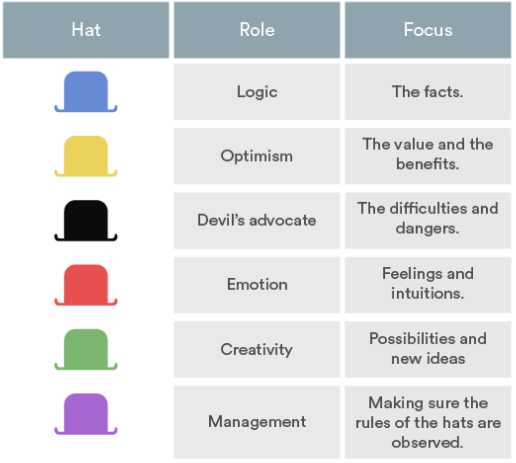
When approaching a new problem or project, have each member of your team put on one of these different "hats" for the discussion. Each "hat" represents a unique set of priorities and perspectives that will help focus your discussion and consider the project from a wide variety of angles.
For example, if you're wearing the "Devil's Advocate" hat, it's your job to consider the project's limitations and challenges. It may feel uncomfortable at first to temporarily adopt a very narrow form of thinking, but the extremes can help teams fully explore a project or idea.

The Zero Draft is an ideation technique for individuals often used by writers and is essentially a form of focused free-writing. For marketers and agency professionals, it can help focus the first stages of a new project by establishing what you currently know and getting your initial ideas out of your brain and onto paper.
Taking your central theme or topic:
The Zero Draft method is all about getting everything you can think of relating to your topic down on paper, so don't be concerned if it looks messy and unfocused. The goal is just to get past the initial block that often plagues creative professionals in the early stages of a new project.
Creative exercises and ideas meetings always go better the more people you have in the room. Unfortunately, that means remote employees might not be solicited for their input as much as they should be. Brain netting is the act of connecting with folks electronically to make sure everyone can offer their input and feedback on a project.
Brain netting doesn't just have to be a group phone call, though. Company messaging platforms like Slack are the perfect way to get everyone into a chatroom to spill their ideas. As ideas are submitted, each chatroom member can even vote for their favorites and combine the best qualities of multiple concepts.
We all carry assumptions with us -- assumptions about what is and isn't possible, about what people want, what will work, and what won't. This exercise forces us to challenge these and put everything on the table.
Draw up a list of all the assumptions you can think of about your currently project -- true or not -- and discuss the list as a group, questioning each one. Doing this at various stages in your campaign development can spark fresh ideas, as well as identify knowledge gaps.

This technique encourages your team to let imaginations run wild. Ask participants to dream up the most unattainable, extreme, and impractical solutions they can think of to a given problem. Create a list of a few dozen wishes pertaining to the task at hand.
Focusing on a selection of wishes, consider and discuss the ideas in detail, with the aim of triggering new but more realistic concepts to pursue. What makes them so impossible? How can that idea be scaled down? Which features of that wish could we integrate into this other approach? You might be surprised to discover applicable, real-world solutions among your team's wildest wishes.

This is a fun exercise where small groups imagine how they would go about solving a given problem if their team were led by a famous character, fictional or real. How would Cat Woman go about positioning your brand as a thought leader in virtual reality? What would Steve Jobs do to improve your latest communications package? How would Don Draper get your core messages across to millennials?
You can either chose someone you think embodies the right qualities for the job to help develop your vision, or someone at the opposite end of that scale, to explore less conventional ideas.

This exercise involves bringing together ideas that serve very different needs or interests to form a new concept. You see this sort of thinking all the time in products like the Apple watch, the Swiss Army knife, smartphones, or even sofa beds.
To put this method into practice, bring a bag of random items to your next meeting, or draw up two lists of unrelated items on the board. Ask team members to pick two or more items and explore different ways they can be connected. This technique can produce some silly results, but it's ultimately a helpful way of getting your team out of a creative rut.
In certain corporations and government entities, data security is the highest priority. So high, in fact, that these organizations have been known to hire hackers -- many of whom have committed internet crimes -- to hack their systems and find out where the weaknesses are.
This "reverse" approach to security, wherein you hack your own company, is considered one of the best ways to secure a server from intrusion. And for us, it's the inspiration behind this fourth brainstorming technique.
When you reverse brainstorm, you essentially work to create problems rather than solutions. 'Why on Earth would you want to do that?' You might ask. Creating problems teaches you what not to do so you're more intuitive to the needs of your project. Think of it like hacking your company to find out where the weaknesses are.
Say, for example, you want to drive awareness to a new product. As a marketer, you have many promotional channels at your disposal, but you don't know how to use them or where to start. In a reverse brainstorming session, you might come up with the following:
Obviously, these are all horrible ideas if your goal is to promote the product. But, take the reverse of these ideas, and you've effectively created three excellent starting points for a supportive campaign: Link to the product in a series of blog posts, develop a Twitter campaign around the product, and identify specific features of the product that prospects would be most interested in reading or hearing about.

In this exercise, participants simply write down a few rough ideas for solving a particular problem on a piece of paper. Each piece of paper is then passed on to someone else, who reads it silently and adds their own ideas to the page. This process is repeated until everyone has had a chance to add to each original piece of paper. The notes can then be gathered, ready for discussion.
The big advantage of brain-writing is that it makes sure everybody is given the opportunity to have their thoughts and ideas thoroughly considered by the group. This avoids the loudest or most extroverted people unintentionally dominating the sessions.
This is a modified excerpt from Creative Ideation for Digital Marketers: Theory to Practice by Dani Mansfield.


Il ressort de ce document valable pour les villes de Québec, de L’Ancienne-Lorette et de Saint- Augustin-de-Desmaures que la valeur de leur parc immobilier a atteint un nouveau sommet. Il est ainsi passé de 78,5G$ lors du dernier rôle, à près de 84G$. Par ailleurs, le territoire urbain compte dorénavant 185 232 unités d’évaluation, soit 3423 de plus que le précédent exercice.
Le marché immobilier de l’agglomération a continué de progresser, mais de façon plus modeste que pour les années précédentes. Du 1er juillet 2014 au 1er juillet 2017, la valeur globale des propriétés de l’agglomération dans le secteur résidentiel toutes catégories confondues a progressé de 1,4%, comparativement à 9% lors du dernier rôle. Pour les propriétés unifamiliales, on remarque une stabilité dans les valeurs par rapport aux rôles 2016 avec 0,3% de hausse.
Du côté des copropriétés, on constate une baisse de valeur de l'ordre de 4,3%. Le marché fortement déséquilibré en faveur de l'acquéreur, en raison de l'abondance de condos à vendre, explique ce recul. En ce qui a trait au secteur locatif, les immeubles de 2 à 5 logements voient leur valeur croître de 2% et ceux de 6 logements et plus de 10%.
Non résidentiel solide
Enfin, dans le secteur non résidentiel, la valeur globale des immeubles commerciaux, industriels et de bureaux a augmenté de 6,1%. Ce parc inclut les hôtels, motels, lesquels ont connu une forte progression de l’ordre de 19,8%. Les édifices du réseau de la santé et de l’éducation ont quant à eux connu une hausse de 4,8%.
Rappelons que les valeurs inscrites reflètent les conditions du marché au 1er juillet 2017. Quant aux nouveaux rôles d’évaluation, ils entreront en vigueur le 1er janvier 2019.
Valeurs moyennes des immeubles
- Propriété unifamiliale: 299 727$ (+0,3%)
- Copropriété: 235 295$ (-4,6%)
- 2 à 5 logements: 362 689$ (+2%)
- Plus de 6 logements: 1 796 505$ (+10%)
Pour information: www.ville.quebec.qc.ca/evaluation
Métro Média