Thursday, 1 November 2018

Phone Photography 101: How to Take Good Pictures With Your Mobile Device

Before the days of smartphones -- if you can remember such a time -- taking a great photo was a labor-intensive process. You'd have buy a fancy camera and editing software for your desktop computer, and invest some serious time and energy into learning how to use them.

But, thanks to our mobile devices and the editing apps that come with them, we can now take high-quality photos and edit them without too many bells and whistles -- all from the same device that we use to make calls.Explore Adobe Photoshop CC basics through quick tips, video explainers, and custom photo filters here.

Brands are catching on, too -- the kinds of visuals remain important to marketing. But make no mistake: Taking a great photo on your smartphone is not as simple as pointing and shooting. There are plenty of bad smartphone photos out there -- I'm sure you've seen at least a few.

What's the secret to taking great pictures with your smartphone, then? As it turns out, there are a few of them. Check out these tips below to improve your smartphone photography game. (And once you have the photo-taking part down, check out some of the best photo editing apps for mobile.)

Marketers-Guide-to-Photoshop-Interactive-Form

How to Take Good Photos With Your Phone: 25 Tips & Tricks

1. Use gridlines to balance your shot.

One of the easiest and best ways to improve your mobile photos is to turn on the camera's gridlines. That superimposes a series of lines on the screen of your smartphone's camera that are based on the "rule of thirds" -- a photographic composition principle that says an image should be broken down into thirds, both horizontally and vertically, so you have nine parts in total.

According to this theory, if you place points of interest in these intersections or along the lines, your photo will be more balanced, level, and allow viewers to interact with it more naturally.

rule-of-thirds.jpg

Source: Digital Photography School

To switch the grid on ...

  • iPhone: Go to "Settings," choose "Photos & Camera," and switch "Grid" on.
  • Samsung Galaxy: Launch the camera app, go to "Settings," scroll down and switch the "grid lines" option to "on."

gridlines.jpg

Source: Lynda.com

2. Set your camera's focus.

Today's phone cameras automatically focus on the foreground of your frame, but not every picture you take on your phone has an obvious subject. To adjust where you want your camera lens to focus, open your camera app and tap the screen where you want to sharpen the view.

If you're taking a photo of something in motion, for example, it can be difficult for your camera to follow this subject and refocus as needed. Tap the screen to correct your phone camera's focus just before snapping the picture to ensure the moving subject has as much focus as possible. A square or circular icon should then appear on your camera screen, shifting the focus of your shot to all of the content inside that icon.

3. Focus on one subject.

Many of the best photos include just one, interesting subject. So when taking a picture of one, spend some extra time setting up the shot. Some professional photographers say that the subject shouldn't fill the entire frame, and that two-thirds of the photo should be negative space -- that helps the subject stand out even more.

But be sure you tap the screen of your smartphone to focus the camera on your subject -- that'll help to ensure that it's focused and the lighting is optimized.

Pro Tip: Once you've taken your photo, you can use filters and apps to make the subject even more vivid, or to crop it to frame the subject correctly. The brightness, contrast, and saturation of the photo can also be adjusted accordingly -- all from your phone.


focus-on-one-subject.pngfocused-food-shot.png

Source: Patrick Janelle

4. Embrace negative space.

"Negative space" simply refers to the areas around and between the subjects of an image --and it can take a photo from "good" to "great."

When you include a lot of empty space in a photo, your subject will stand out more and evoke a stronger reaction from your viewer. And what does negative space looks like? It's often a large expanse of open sky, water, an empty field, or a large wall, as in the examples below.


negative-space.pngembrace-negative-space.png

Source: Eric Christian

5. Find different perspectives.

Taking photos from a unique, unexpected angle can make them more memorable -- it tends to create an illusion of depth or height with the subjects. It also makes the image stand out, since most mobile photos are taken either straight -on or from a bird's eye view.

Try taking a photo directly upward and playing with the sky as negative space, like in the first photo below. Or, you can try taking it at a slight downward angle.

Pro Tip: If you take a photo and find the perspective is a little askew or tilted, use the SKRWT photo editing app to make the lines look clean and square.


interesting-perspectives.jpgbookshelf-perspective.png

Source: iPhone Photography School; Paul Octavious

6. Play with reflections.

There's something so idyllic about seeing the sky reflected in a body of water. There's a reason why we love seeing that -- our eyes are drawn to reflections. So look for opportunities to play with them in photos.

There are plenty of out-of-the-box places to find reflections -- puddles, larger bodies of water, mirrors, sunglasses, drinking glasses, and metallic surfaces are just a few.


capture-reflections.pngplaying-with-reflections.png

Source: Joshua Lott; Carlos Copertone

7. Use leading lines.

In some photos, there's a line that draws the viewer's eye toward a certain part of the frame. Those are called leading lines. They can be straight or circulinear -- think staircases, building facades, train tracks, roads, or even a path through the woods.

Leading lines are great for creating a sense of depth in an image, and can make your photo look purposefully designed -- even if you just happened to come upon a really cool shape by accident.


leading-lines-path.pngleading-lines-spiral-staircase.png

Source: Carlos Copertone; Paul Octavious

8. Look for symmetry.

Symmetry can be defined as "a vague sense of harmonious and beautiful proportion and balance." And pictures that contain symmetry can be incredibly pleasing to the eye -- it's also one of the simplest and most compelling ways to compose a photo.

In photography, symmetry usually means creating an image that can be divided into two equal parts that are mirror images of each other. That's a bit different than reflections -- symmetry can be found "in the wild," as per the staircase picture, or you can set up your photo accordingly, like photographer Eric Christian did in the first photo below.

And remember -- use those gridlines from tip #1 to line everything up perfectly.

symmetry.pngsymmetrical-stairs.png

Source: Eric Christian; Carlos Copertone

9. Keep an eye out for repetitive patterns.

Repetitive patterns are very pleasing to the eye -- they appear whenever strong graphic elements are repeated over and over again, like lines, geometric shapes, forms, and colors. These patterns can make a strong visual impact, and photographing something like a beautiful, tiled floor can be enough to create a striking image. Other times, it's more fun to keep an eye out for where they appear naturally or unintentionally, like with the congruent fire escapes on the left.


symmetry-in-buildings.pngsoup-pattern.png

Source: Patrick Janelle

10. Play around with color blocking.

Isn't it cool when an entire photo is black and white, except for a single object? It turns out that yes, indeed, there are apps for that. One of our favorites is Touch Color -- an app that automatically converts a picture to grayscale and lets you fill in the parts you want to colorize.

Color blocking can help to highlight the elements of a photo that you want to stand out, like a plant or something else with a bold hue. It achieves a similar goal as negative space, in that it can help a single subject stand out -- but with color blocking, the photo's other elements remain intact for a cohesive image.

Grayscaled photo taken on mobile camera with color blocking to reveal purple flower in woman's hand

Source: Coloring Pages

11. Avoid zooming in.

When you take a photo from a distance, it's tempting to zoom in on something specific you're trying to capture. But it's actually better not to zoom in -- doing so can make the photo appear grainy, blurry, or pixelated.

Instead, try to get closer to your subject -- unless it's a wild animal, in which case we would advise keeping your distance -- or take the photo from a default distance, and crop it later on. That way, you won't compromise quality, and it's easier to play around or optimize a larger image.

crop-photo-1.jpg

Source: Obama Pacman

12. Capture small details.

You may have heard the phrase, "It's the little things." Sometimes, that also applies to photos. Close-up images that capture small, intricate, and delicate details can make for really compelling visual content. Keep an eye out for textures and patterns like peeling paint, a gravel road, or a tile tabletop.

Pro Tip: Use the "sharpen" tool in your favorite photo editing app to (conservatively) sharpen the details of your photo. You might also download the Camera+ app and use its Clarity filter, which is what The Wall Street Journal's Kevin Sintumuang calls the app's "secret sauce -- it adds pro-camera crispness to almost any shot."


spider-details.pngtile-patterns.png

Source: Paul Octavious; Eric Christian

13. Use natural light.

It's hard to find a great smartphone photo that was taken with a flash. Most of the time, they make a photo look overexposed, negatively altering colors and making human subjects look washed out. In fact, even the iPhone 7's flash is rumored to have some flaws.

Take advantage of the sources of natural light you can find, even after dark. This gives you a chance to play with shadows, like in the second image below, or create a silhouette with other ambient sources of light, like traffic and surrounding buildings.

Once you've taken the photo, play with the "Exposure" tool in your favorite photo editing app to see if you can make the image slightly brighter, without making it too grainy.


dont-use-flash.pngno-flash-flower.png

Source: Patrick Janelle; Paul Octavious

14. If you use flash, only do so during the day.

Sometimes, using your camera's flash can improve a photo -- but rarely does it do so at night. Because dark shots reveal a much sharper contrast against your phone's flash, it can make any flash look look invasive and uneven

In already well-lit spaces, however, a flash can help to soften some dark shadows behind or beneath your main subject.

When framing your next shot, look on the ground or against vertical surfaces for any dark shadows you might want to remove. If you see any, flip on the flash manually in your camera app. Setting your phone's camera flash to "auto" won't guarantee that your phone will notice the shadows you want to get rid of. Just remember to turn the flash off again when you're done.

Check out the difference in the two mobile photos of a metal figurine, below. You can see the desk shadow is considerably softer in the flash-based photo on the right. The flash even brings out more details in the body of the subject. Consider this difference next time you're shooting product photography.


Metal figurine with shadow taken on phone with no flashMetal figurine with soft shadow taken on phone with flash

15. Consider buying a mobile tripod.

Although mobile devices make it easy to snap any photo on the go, there's never been an easy way to ensure the shot stays level and balanced when you shoot -- especially if you want to be in the picture and not just take a typical selfie with your extended arm.

mobile-tripod-joby

Source: Joby

Mobile tripods give you the freedom to mount your smartphone for quick hands-free shots without lugging any heavy equipment with you. Most mobile tripods are barely bigger than your mobile device, and can bend to any angle. Check out one of them from Joby, above, and learn how these miniature tripods can help enhance your mobile video experience below.

16. Set your camera app's exposure manually.

Another mobile camera feature you'll want to set manually is your exposure. Tapping your screen when your phone's camera is on doesn't just refocus the lens on a new subject -- it also automatically adjusts how much light the camera lets in. This, too, won't always look just right. It's best to adjust it by hand.

To change your mobile camera's exposure by hand, open your camera app and tap the screen. When you see the lens refocus, you'll see a very small sun icon and a vertical scale. Slowly swipe your finger up and down this scale to adjust the light level.

17. Create abstracts.

Abstract photos are meant to capture the essence of an object, or a series of them, without revealing the entire landscape as a whole. In other words, they serve the purpose of creating unique, surprising images from ordinary subjects.

This look can be accomplished by cropping an abstract portion of an otherwise normal photo, or by taking close-up shots of objects that leave the viewer wondering -- in admiration, of course -- what the subject might be. And subjects with patterns or repetition are great candidates for abstract photography, like in the photo of sliced figs below.


abstract-architecture.jpgfig-abstraction.png

Source: iPhone Photography School; Patrick Janelle

18. Take candids.

Posed photos can be great for the sake of memories -- happy moments with friends, family, or the occasional run-in with a celebrity. But sometimes, candid shots of people doing things, or people with people, can be far more interesting.

That's because candid photos are better able to effectively capture the emotion and essence of a moment. One of the best ways to capture this kind of shot is to just take as many photos as possible. You'll have more to choose from, and the best photos often happen when the "stars align," so to speak, in a single moment -- everyone's eyes are open, one person is tilting their head just so, and you finally got a shot of your chronically closed-lip friend smiling with his teeth.


Candid shot of three chefs cooking, taken with phone cameraeating-candid.png

Source: Patrick Janelle

19. Be non-conventional.

Composition is a huge part of what makes a photo great, but so is the photo's subject. Some of the most delightful and remarkable photos come out of cool, unique ideas. Images are more effective than text at evoking emotion from your viewers -- that often means getting your photos to say something.

Try thinking outside of the box when it comes to what you're capturing -- your viewers could be pleasantly surprised by a cool or unexpected subject.


leaf-dog-constellation.pngBag of hot chocolate with straw, taken with phone camera

Source: Paul Octavious

20. Make 'em laugh.

Speaking of evoking emotion, sometimes the most memorable photos are the ones that make us giggle. The image below of an older woman wearing a brightly-colored shirt stating "Hi hater" is funny because it's unexpected -- and there's a part of us that admires her, too. The second image of the dog toy on a dinner plate pokes fun at classic Instagram food shots, but it's from a dog's perspective. If you can make your audience laugh, they're likely to enjoy your photo.


Funny photo taken with a mobile device with woman wearing Hi Haters t-shirtpug-eating-toy.png

Source: Baddie Winkle; Jeremy Veach

21. Clean your phone's lens.

A smartphone camera might be more convenient to carry around than a full-fledged photojournalist's camera, but it comes at the cost of protection.

Your phone is usually in your pocket or your bag when you're out of the house. All the while, the device's camera lens is collecting all kinds of dust and lint. Be sure to clean this lens with a soft handkerchief before taking a photo. You might not be able to tell just how dirty the lens was until you start editing your picture, and making sure the lens is crystal clear before taking a shot can keep you from starting from scratch.

22. Attach an external lens.

Want to get really fancy? External lenses are for you. There are actually several out there that can be attached to the top of your smartphone's native camera lens -- from fish-eye to wide-angle lenses, these add-ons can bring an entirely new quality and perspective to your photos.

According to Wirecutter, the best camera lenses for iPhone photography are made by Moment, a manufacturer of mobile lenses. Start there, or do some research to find the lens add-ons that fit your smartphone photography needs.

Horses looking into fisheye external lens attached to phone camera

Source: MobileFun.co.uk

23. Don't be afraid to edit.

Composing and taking your smartphone photo is just the first step to making it visually compelling. Editing your photos is the next step -- and a very critical one, at that. Filters can be a valuable photographic tool, particularly when it comes to two goals: 1) Removing blemishes from a picture, and 2) making food look even more delicious.

For the first, InStyle magazine compiled a fun list of "The Best Instagram Filters for Every Beauty Complaint" -- and now, the iPhone photos app offers many similar filters. There are also apps like Pho.to, which can automatically retouch facial photos without a lot of work. And when it comes to those photos of your daily meals? One of the latest apps available is Foodie, which comes with its own set of filters optimized for different types of food.

But there are many other great photo and video editing apps out there for mobile devices -- check out this post to see some of the best ones out there.

51b3f40f.png

Source: LINE Corp.

Want more tips on creating visual content? Check out these examples of explainer videos.
Marketer's Guide to Photoshop
The Marketer's Guide to Photoshop

[Read More ...]

La 35e édition se prépare

Le soccer arrive à l'école du Boisé

«Il y avait beaucoup de demandes depuis deux ans pour avoir une autre concentration soccer sur le territoire de la Commission scolaire des Premières-Seigneuries (CSDPS). Je m'occupe déjà de celle de l'école primaire Beausoleil-et-du-Parc dans l'arrondissement Beauport, qui desservira maintenant le sud du territoire alors que la nouvelle concentration s'occupera de la couronne nord.»

Le responsable assure que cette nouveauté n'amènera pas de compétition entre les deux écoles. «Au contraire, c'est un partenariat et on le voit comme le même programme avec deux écoles différentes. Les deux institutions vont pratiquer ensemble lors de l'automne et du printemps au stade Marc-Simoneau sur la rue Cambronne et l'hiver ils pratiqueront dans leurs gymnases respectifs.»

Le nouveau programme a été officiellement accrédité par l'Association régionale de soccer de Québec (ARSQ). Selon Vincent Cournoyer, la première rencontre d'information a attiré les parents de 45 enfants ce qui laisse entrevoir de belles choses pour le futur du soccer à Québec. Le coût de l'inscription de la nouvelle concentration sera entre 800$ et 850$ pour l'année scolaire.


[Read More ...]

How to Write a Business Letter That Won’t Get Ignored

Nowadays, writing a letter can seem completely archaic. I mean, do people even send mail anymore or do they only communicate through email and messaging?

In the business world, letters are actually still crucial for collaboration. To convince someone to offer you a job, you need to write them a compelling cover letter. And to persuade someone to speak at your company’s event, you need to write a gripping pitch.

A lot of professionals overlook the importance of writing high-quality business letters because they seem outdated. As a result, most people don’t actually know how to write one.Download our free guide here for tips to become a better writer. Fortunately, if you're in the same boat, we've got you covered. Below, we'll teach you how to craft a persuasive business letter for any purpose and situation.

To teach you how to write a business letter in more detail than the snippet above, let's take a look at a letter I wrote to Dharmesh Shah, HubSpot’s CTO, when I was a wide-eyed college student trying to convince him to speak at my school.

I’ll analyze the most important parts of my letter -- the introduction, body text, and call-to-action -- and explain how and why they can strengthen your own business letters.

Business Letter Example

October 1, 2016


Dharmesh Shah

HubSpot

25 First Street,

Cambridge, MA 02141


Dear Mr. Shah,

When my freshman year of college ended, I was fortunate enough to work as a digital marketing intern at a startup called SlideBatch. They were introducing a new content marketing tool to the market, and my job was to apply that tool to their clients’ social media marketing campaigns and prove that SlideBatch was an effective marketing solution. I was so excited to get to work, but I had one small problem. I didn’t know what content marketing was. So, I did some research on the Internet and discovered HubSpot’s Marketing blog.

Fast forward a year and half, and I’m still reading HubSpot’s Marketing blog and leveraging its insights at my third digital marketing internship. Reading your blogs changed my life. I entered college believing financial advising was my destiny. But, after learning about HubSpot’s inbound marketing philosophy -- how helping people is the ultimate way to increase brand trust and engagement -- I was hooked. Shortly after my internship with SlideBatch ended, I decided to pursue digital marketing instead of financial advising. I’ve haven’t looked back since.

HubSpot’s influence on my life is the reason I’m writing to you today. I’m certain if you spoke at my school, DePauw University, about your life, HubSpot, and the inbound marketing philosophy, there would be hundreds of undecided students who start pursuing digital marketing. I know this because DePauw’s McDermond Speaker Series is one of the best platforms for business leaders to showcase their passion for their industry, company, and work. Brad Stevens of the Boston Celtics, Angie Hicks of Angie’s List, and Bill Rasmussen of ESPN have all successfully used the McDermond Speaker Series to inspire the world’s next generation of business leaders, and I know you could, too.

We would be honored if you spoke at our school. Thank you for your time and consideration, and we look forward to hearing from you!

Sincerely,


Clifford Chi

313 South Locust St.

Greencastle, IN 46136

555-555-5555

cliffordchi@aim.com

Introduction (first and second paragraphs)

To instantly grab Dharmesh’s attention and entice him to read the rest of my letter, you'll notice I didn’t lead with the standard "I’m writing to you today because…” introduction. Instead, I engaged him with a story about how I discovered HubSpot and how his company changed my life. I thought this would strongly resonate with him because I assumed, as a co-founder of HubSpot, he would love to see how his life’s work has benefited others.

In your own business letters, you don’t necessarily need to tell a story to immediately hook your reader and persuade her to read on. But you should definitely describe how she’s made an impact on your life. This is what will truly grab and hold her attention.

Body text (third paragraph)

After my introduction, I swiftly segued into why I was writing to Dharmesh -- to ask him to speak at my school. Personal anecdotes are an effective way to engage readers, but I’d lose Dharmesh’s attention if I didn’t cut to the chase.

Once I stated my letter’s intent, I quickly pitched the benefits of speaking at my school and bolstered the reputation of my school’s speaker series. By emphasizing how speaking at my school could inspire hundreds of students to pursue digital marketing and highlighting the group of impressive speakers Dharmesh could join, I focused on the dividends he would reap from being a McDermond Series Speaker, rather than how my school would benefit from his guest appearance.

So whether you’re trying to convince someone to hire you or speak at your school, you must first persuade your reader that doing what you ask of them will ultimately benefit them and be in their best interest.

Call-to-action (fourth paragraph)

In my last paragraph, I politely ask Dharmesh to speak at my school again.  Even though I already asked him this earlier, it's important I end my letter with a clear next step. It packs more of a punch and crystalizes the desired action in his mind.

Strong call-to-actions are a crucial element of a persuasive business letter. Because if you don't tell your reader what to do next, you might as well have never written your letter in the first place.

free guide to writing well


[Read More ...]

4 Talent Acquisition Strategies to Find the Best Employees

In 2018, almost 75% of employers struggled to fill positions with the right candidates.

Unfortunately, this talent shortage is only worsening -- research by Korn Ferry predicts by 2020, the technology, media, and telecommunications industries alone could be short over one million skilled workers globally.Click here to download our free guide to hiring and training a team of all-stars.To succeed long-term, it's critical your business is able to hire and retain the best, most talented employees. But it's a daunting task, which is why you need a talent acquisition strategy.

Your pursuit of top talent shouldn't solely rely on traditional, short-term recruitment strategies like sending LinkedIn messages or attending Job Fairs. To ensure top talent acquisition and retention, you'll need to devise a strategic long-term plan.

Here, we've cultivated four critical talent acquisition strategies to ensure you're finding the best people.

1. Align with your business goals.

Consider your business goals for the next one to five years, and use those objectives to tailor your acquisition strategy to meet those needs. While recruitment tends to focus on filling vacancies within departments, talent acquisition is more about considering how your company is going to expand long-term, and then finding employees who can help take you there.

For instance, are you planning on expanding into Latin America? If so, perhaps your HR department should focus on attracting candidates with international or regional experience. Or, maybe you're planning on creating a new product, in which case, your HR efforts should focus on attracting talented software developers and coders.

Certain roles might not even exist yet, but you'll want to consider what type of talent you'll need to hit your business's long-term goals. Remember, investing in the right candidates will pay off for your company, long-term.

2. Use data and marketing to create better acquisition material.

You wouldn't create a marketing campaign without data, so why should you recruit without it?

Talent acquisition should be treated with just as much importance as any of your marketing campaigns. Convincing people to join your company is just as necessary as incentivizing people to buy your products.

There are plenty of different opportunities to use data to strengthen your talent acquisition strategy. For instance, you might use data to figure out where your top talent came from, and use that information to focus your talent acquisition efforts on certain academic programs or professional networking sites.

Additionally, your HR team should partner with your marketing department to refine job descriptions, career pages, emails, and more.

Using data, you can figure out if certain questions are deterring candidates from filling out job applications, and eliminate those questions. Alternatively, perhaps you'll find adding images or videos to highlight company culture incentivizes more candidates to fill out job forms. Or, maybe more candidates apply for a job with description A over description B.

By using analytics and data, you're able to ensure your job descriptions and career pages aren't deterring qualified people from applying.

3. Expand outreach strategies.

To find better talent, you'll need to expand your sourcing strategies. Different skill sets require different methods of outreach. You'll find your best marketers in a different place than your best programmers, so you'll want to diversify your sourcing approach.

Rather than spending all your time on LinkedIn, consider other specialized job boards, academic programs, or networking events where you might find a specific group of talented professionals. For instance, to attract talented coders, Deloitte's recruiters attended a hackathon and found prospective candidates.

It's critical you identify where you can find the vast majority of your top talent, whether that be professional events, conferences, online forums, or social networks. Then, focus on strengthening relationships and networking with the right people -- not only will you grow your pool of potential hires, but you'll also grow brand awareness for your company, which will help you attract talent in the future, as well.

4. Focus on better employer branding.

Employer branding is critical for creating a successful talent acquisition strategy -- in fact, 62% of professionals across 26 countries rank employer brand as the deciding factor when applying for a job.

When talented candidates are comparing companies, they're going to choose the one with the best values, culture, and work-life balance. By cultivating an impressive employer brand, you'll attract better talent and find more long-term success.

To succeed with talent acquisition, you'll need to be able to answer the question, "Why your company, over all the others?" This is why employer branding is a critical strategy for finding the best employees.

Consider how you can reframe your branding to focus on the best aspects of your company's values and culture. It isn't just about mentioning health benefits or compensation -- you'll also want to convey your impressive company culture, in which employees collaborate efficiently and enjoy spending time with one another. You might mention your flexible remote policy and other work-life balance perks, or your company's emphasis on growth opportunities.

It's important you broadcast these unique attributes through employee review sites like Glassdoor, as well as your "About Us" page on your company website. When highly qualified people are contemplating your company over your competitors, it just might be those reviews that end up convincing them.


learn how to hire an all-star marketing team


[Read More ...]

Wednesday, 31 October 2018

7 Digital Marketing Strategies and How to Plan Your Own Campaign [Template]

There's no question that, in the modern landscape, a big part of your marketing strategy is digital. Consumers and businesses alike are almost always online -- and you want to be able to reach them and observe their behavior where they spend the most time.

But when you're growing a business, it seems like this ever-evolving landscape can quickly become overwhelming. There's already enough to do -- how are you also supposed to create, fine-tune, and maintain an agile digital marketing strategy?

New Call-to-action

We've compiled a list of seven digital marketing strategies that marketers can adapt to help their teams and businesses grow, as well as a crash course on the meaning of digital strategy and marketing campaigns. Then, grab your free collection of digital content marketing templates at the end of this post.

The term "strategy" might seem intimidating, but building an effective digital strategy doesn't need to be difficult.

In simple terms, a strategy is just a plan of action to achieve a desired goal, or multiple goals. For example, your overarching goal might be to generate 25% more leads via your website this year than you drove last year.

Depending on the scale of your business, your digital marketing strategy might involve multiple digital strategies -- each with different goals -- and a lot of moving parts. But coming back to this simple way of thinking about strategy can help you stay focused on meeting those objectives.

Despite our simplification of the term "strategy," there's no doubt it can be difficult to get started actually building one. Let's see what a digital marketing campaign looks like, and then, we'll jump into those seven building blocks to help you create an effective digital marketing strategy to set up your business for online success.

What Is a Digital Marketing Campaign?

It's easy to confuse your digital strategy with your digital marketing campaigns, but here's how to distinguish the two.

As we've already outlined, your digital strategy is the series of actions you take to help you achieve your overarching marketing goal. Your digital marketing campaigns are the building blocks or actions within your strategy that move you toward meeting that goal.

For example, you might decide to run a campaign sharing some of your best-performing gated content on Twitter, to generate more leads through that channel. That campaign is part of your strategy to generate more leads.

Here a few other well-known examples of digital marketing campaigns and the strategies they employ.

1. GoPro

Digital strategy: Earned media, user-made video

GoPro is famous for its incredible point-of-view style action footage, all taken from the company's classic fisheye lens. What you might not know is that so much of the video content you see on its YouTube channel wasn't made by GoPro, but rather by its most loyal users.

By populating its YouTube channel with user-made video content, GoPro has encouraged an entire fanbase of outdoorspeople to take amazing footage of their adventures and post it online -- often with credit back to GoPro. This ongoing digital marketing campaign has championed the use of video to spread the word about the GoPro product line -- and a lot of the content is created by the customers themselves.

Check out the video below, which GoPro republished, awarding the video's original shooter with being one of the best videos in its category.

2. Delta Air lines

Digital strategy: Owned media, Twitter stories

You wouldn't think of an airline as a leader in creative digital marketing, but don't underestimate the stories they can tell on social media (emphasis on "stories").

Delta Air Lines is a prolific user of social media, specifically on its Twitter handle. The brand uses this account to engage potential passengers in a variety of ways that are both timely and emotionally stimulating. Last month, in honor of Breast Cancer Awareness Month, the company began sharing personal stories from Delta employees directly through the company's Twitter feed. Here's the beginning of one story's thread, below.

3. Geico

Digital strategy: Paid media, YouTube Preroll ads

All you need to hear is the word "Geico" to remember you can save 15% or more on your car insurance. But even a company with such a memorable tagline can risk annoying its buyers if its marketing campaign is too longwinded.

That's why Geico launched a series of preroll ads on YouTube that admit to the ad's brevity in the videos themselves.

Preroll ads are a form of paid content on YouTube wherein you pay YouTube to roll 15- to 20-second ads ahead of videos that have the same audience as the advertiser. While some companies try to squeeze as much messaging as they can into that short slot, Geico has taken the opportunity to make fun of itself for taking up your time in the first place. In this way, its YouTube preroll commercials are actually entertaining. Check out one of them below.

4. Wayfair

Digital strategy: Owned media, Instagram tags

Wayfair, a home furnishings and decor merchant, has a truly innovative Instagram strategy. Let's just say its photos aren't just photos.

Instagram gives companies an opportunity to show their followers a more intimate side of the brand, lifting the curtain on the business to show off the employees and events that make the organization what it is. For Wayfair, however, Instagram isn't just a culture play -- it's a purchase page.

Using Instagram's product tags, Wayfair has taken some of its prettiest home interior shots on Instagram, and tagged them with product and price labels. It's a digital marketing campaign that shows people exactly how much each item in the photo costs, helping Wayfair generate buyers right from its Instagram account. Check out an example, below.

Digital marketing campaign by Wayfair using Instagram shopping tags in a photo of living room furnishings

5. Mastercard

Digital strategy: Owned media, Travel blog

Mastercard bases its brand on the stories and adventures that cardholders go on. But what good is a travel-based brand without a travel-based digital marketing campaign to go with it?

Priceless Cities, Mastercard's travel blog, gives readers a travel resource to go along with the credit cards that help pay for these readers' destinations. It's a pretty good idea, as it allows the company to better align itself not just with the things its customers buy, but with the places its customers go. Check out the blog here.

6. ETF Securities

Digital strategy: Paid media, LinkedIn Sponsored Content

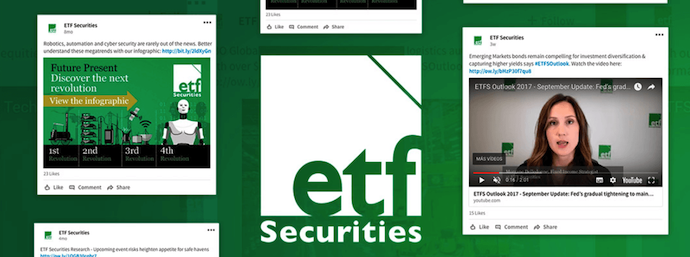
ETF Securities is a small, asset management service based in Australia catering to wealth managers and investors in Europe. Because the service they provide is so complex, the company found where its customers hung out the most -- LinkedIn -- and sponsored paid content on this platform that drives more interest in investments and helps customers make smarter financial decisions.

With this digital campaign, ETF Securities saw 95% year-over-year growth in its LinkedIn followers.

etf-securities-sponsored-content-linkedin

7. Red Bull

Digital strategy: Owned media, Lifestyle news

Red Bull has become more well known for its sponsorship of extreme sports than the energy drink it sells. It's a natural fit for the types of people the drink appeals to. But instead of creating digital content on the energy drink industry, Red Bull captures its audience with articles and videos all about the latest happenings in the extreme sports community.

In this digital marketing campaign, Red Bull teaches us that what you sell isn't always the ideal content strategy. Rather, it's the lifestyle that your customers live. Check out the company's website here.

Homepage of Red Bull blog featuring a digital marketing campaign focused on extreme sports

It's important to note that even if a campaign runs over the course of a couple of years, it doesn't make it a strategy -- it's a tactic that sits alongside other campaigns to support a larger marketing strategy. For example, ETF Securities (cited above) hosted a campaign to increase its followers on LinkedIn, using the digital strategy of sponsored content (a form of paid media). This one strategic campaign might be one small part of a larger digital marketing strategy that serves to generate more leads for one of its products or business lines.

Now that we've gotten to grips with the basics of digital strategy and digital marketing campaigns, let's dig into how to build your strategy.

1. Build your buyer personas.

For any marketing strategy -- offline or online -- you need to know who you're marketing to. The best digital marketing strategies are built upon detailed buyer personas, and your first step is to create them. (Need help? Start here with our free buyer persona kit.)

Buyer personas represent your ideal customer(s) and can be created by researching, surveying, and interviewing your business's target audience. It's important to note that this information should be based upon real data wherever possible, as making assumptions about your audience can cause your marketing strategy to take the wrong direction.

To get a rounded picture of your persona, your research pool should include a mixture of customers, prospects, and people outside your contacts database who align with your target audience.

But what kind of information should you gather for your own buyer persona(s) to inform your digital marketing strategy? That depends on your businesses, and is likely to vary depending on whether you're B2B or B2C, or whether your product is high cost or low cost. Here are some starting points, but you'll want to fine-tune them, depending on your particular business.

Quantitative (or Demographic) Information

  • Location. You can use web analytics tools like Google Analytics to easily identify what location your website traffic is coming from.
  • Age. Depending on your business, this may or may not be relevant. It's best to gather this data by identifying trends in your existing prospect and customer database.
  • Income. It's best to gather sensitive information like personal income in persona research interviews, as people might be unwilling to share it via online forms.
  • Job Title. This is something you can get a rough idea of from your existing customer base, and is most relevant for B2B companies.

Qualitative (or Psychographic) Information

  • Goals. Depending on the need your product or service was created to serve, you might already have a good idea of what goals your persona is looking to achieve. However, it's best to cement your assumptions by speaking to customers, as well as internal sales and customer service representatives.
  • Challenges. Again, speak to customers, sales and customer service representatives to get an idea of the common problems your audience faces.
  • Hobbies and interests. Speak to customers and people who align with your target audience. If you're a fashion brand, for example, it's helpful to know if large segments of your audience are also interested in fitness and well-being, as that can help inform your future content creation and partnerships.
  • Priorities. Speak to customers and people who align with your target audience to find out what's most important to them in relation to your business. For example, if you're a B2B software company, knowing that your audience values customer support over a competitive price point is very valuable information.

Take this information and create one or more rounded personas, like Marketing Molly below, and ensure they're at the core of your digital marketing strategy.

HubSpot form to add a buyer persona to a digital marketing strategy

2. Identify your goals and the digital marketing tools you'll need.

Your marketing goals should always be tied back to the fundamental goals of the business. For example, if your business's goal is to increase online revenue by 20%, your goal as a marketer might be to generate 50% more leads via the website than you did last year to contribute towards that success.

Whatever your overarching goal is, you need to know how to measure it, and more important, actually be able to measure it (e.g., have the right digital marketing tools in place to do so). How you measure the effectiveness of your digital strategy will be different for each business and dependent on your goal(s), but it's vital to ensure you're able to do so, as it's these metrics which will help you adjust your strategy in the future.

If you're a HubSpot customer, the Reporting add-on in your HubSpot software brings all of your marketing and sales data into one place, so you can quickly determine what works and what doesn't.

HubSpot graph reporting on digital campaign

3. Evaluate your existing digital channels and assets.

When considering your available digital marketing channels or assets to incorporate into your strategy, it's helpful to first consider the bigger picture to avoid getting overwhelmed. The owned, earned, and paid media framework helps to categorize the digital 'vehicles', assets, or channels that you're already using.

Owned Media

This refers to the digital assets that your brand or company owns -- whether that's your website, social media profiles, blog content, or imagery, owned channels are the things your business has complete control over. This can include some off-site content that you own, but isn't hosted on your website, like a blog that you publish on Medium, for example.

Earned Media

Quite simply, earned media refers to the exposure you've earned through word-of-mouth. Whether that's content you've distributed on other websites (e.g., guest posts), PR work you've been doing, or the customer experience you've delivered, earned media is the recognition you receive as a result. You can earn media by getting press mentions, positive reviews, and by other people sharing your content on social media, for instance.

Paid Media

Paid media is a bit self-explanatory in what its name suggests -- and refers to any vehicle or channel that you spend money on to catch the attention of your buyer personas. This includes things like Google AdWords, paid social media posts, native advertising (like sponsored posts on other websites), and any other medium for which you directly pay in exchange for visibility.

Gather what you have, and categorize each vehicle or asset in a spreadsheet, so you have a clear picture of your existing owned, earned, and paid media.

Your digital marketing strategy might incorporate elements of all three channels, all working together to help you reach your goal. For example, you might have an owned piece of content on a landing page on your website that's been created to help you generate leads. To amplify the number of leads that content generates, you might have made a real effort to make it shareable, meaning others are distributing it via their personal social media profiles, increasing traffic to the landing page. That's the earned media component. To support the content's success, you might have posted about the content to your Facebook page and have paid to have it seen by more people in your target audience.

That's exactly how the three can work together to help you meet your goal. Of course, it's not compulsory to use all three. If your owned and earned media are both successful, you might not need to invest in paid. It's all about evaluating the best solution to meet your goal, and then incorporating the channels that work best for your business into your digital marketing strategy.

Now you know what's already being used, you can start to think about what to keep and what to cut.

4. Audit and plan your owned media campaigns.

At the heart of digital marketing is your owned media, which pretty much always takes the form of content. Every message your brand broadcasts can generally be classified as content, whether it's your 'About Us' page, your product descriptions, blog posts, ebooks, infographics, or social media posts.

Content helps convert your website visitors into leads and customers, and helps to raise your brand's profile online -- and when it's optimized, it can also boost any efforts you have around search/organic traffic. Whatever your goal, you're going to need to use owned content to form your digital marketing strategy.

To build your digital marketing strategy, you need to decide what content is going to help you reach your goals. If your goal is to generate 50% more leads via the website than you did last year, it's unlikely that your 'About Us' page is going to be included in your strategy -- unless that page has somehow been a lead generation machine in the past.

It might more likely that an ebook gated by a form on your website drives far more leads, and as a result, that might be something you want to do more of. Here's a brief process to follow to work out what owned content you need to meet your digital marketing goals:

Audit your existing content.

Make a list of your existing owned content, and rank each item according to what has previously performed best in relation to your current goals. If your goal is lead generation, for example, rank them according to which generated the most leads in the last year. That might be a particular blog post, an ebook, or even a specific page on your website that's converting well.

The idea here is to figure out what's currently working, and what's not, so that you can set yourself up for success when planning future content.

Identify gaps in your existing content.

Based on your buyer personas, identify any gaps in the content you have. If you're a math tutoring company and have discovered in your audience research that one of your persona's biggest challenges is finding interesting ways to study, but you don't have any content that speaks to that concern, then you might look to create some.

By looking at your content audit, you might discover that ebooks hosted on a certain type of landing page convert really well for you (much better than webinars, for example). In the case of this math tutoring company, you might make the decision to add an ebook about 'how to make studying more interesting' to your content creation plans.

Create a content creation plan.

Based on your findings and the gaps you've identified, make a content creation plan outlining the content that's necessary to help you hit your goals. This should include:

  • Title
  • Format
  • Goal
  • Promotional channels
  • Why you're creating it (e.g., "Marketing Molly struggles to find time to plan her blog content, so we're creating a template editorial calendar")
  • Priority level (to help you decide what's going to give you the most "bang for your buck")

This can be a simple spreadsheet, and should also include budget information if you're planning to outsource the content creation, or a time estimate if you're producing it yourself.

5. Audit and plan your earned media campaigns.

Evaluating your previous earned media against your current goals can help you get an idea of where to focus your time. Look at where your traffic and leads are coming from (if that's your goal) and rank each earned media source from most effective to least effective.

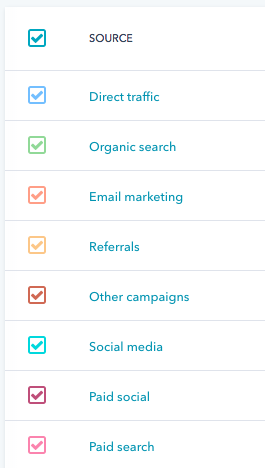
You can get this information from tools like Google Analytics, or the Sources Reports in your HubSpot software.

Sources in traffic analytics dashboard in HubSpot

You might find that a particular article you contributed to the industry press drove a lot of qualified traffic to your website, which in turn converted really well. Or, you might discover that LinkedIn is where you see most people sharing your content, which in turn drives a lot of traffic.

The idea here is to build up a picture of what earned media will help you reach your goals, and what won't, based on historical data. However, if there's something new you want to try, don't rule that out just because it's not yet tried and tested.

6. Audit and plan your paid media campaigns.

This process involves much of the same process: You need to evaluate your existing paid media across each platform (e.g., Google AdWords, Facebook, Twitter, etc.) to figure out what's likely to help you meet your current goals.

If you've been spending a lot of money on AdWords and haven't seen the results you'd hoped for, maybe it's time to refine your approach, or scrap it altogether and focus on another platform that seems to be yielding better results. (Check out this free AdWords guide for more on how to leverage it for business.)

By the end of the process, you should have a clear idea of which paid media platforms you want to continue using, and which (if any) you'd like to remove from your strategy.

7. Bring it all together.

You've done the planning and the research, and you now have a solid vision of the elements that are going to make up your digital marketing strategy. Here's what you should have so far:

  1. Clear profile(s) of your buyer persona(s)
  2. One or more marketing-specific goals
  3. An inventory of your existing owned, earned, and paid media
  4. An audit of your existing owned, earned, and paid media
  5. An owned content creation plan or wish list

Now, it's time to bring all of it together to form a cohesive strategy document. Let's revisit what digital strategy means: the series of actions that are going to help you achieve your goal(s) using online marketing.

By that definition, your strategy document should map out the series of actions you're going to take to achieve your goals, based on your research to this point. A spreadsheet is an efficient format -- and for the sake of consistency, you might find it easiest to map out according to the owned, earned, and paid media framework we've used so far.

You'll also need to plan your strategy for a longer-term period -- typically, something like 12 months is a good starting point, depending on how your business is set up. That way, you can overlay when you'll be executing each action. For example:

  • In January, you might start a blog which will be continually updated once a week, for the entire year.
  • In March, you might launch a new ebook, accompanied by paid promotion.
  • In July, you might be preparing for your biggest business month -- what do you hope to have observed at this point that will influence the content you produce to support it?
  • In September, you might plan to focus on earned media in the form of PR to drive additional traffic during the run-up.

By taking this approach, you're also creating a structured timeline for your activity, which will help communicate your plans to your colleagues -- not to mention, maybe even help keep you sane.

Your Path to Digital Marketing Strategy Success

Your strategy document will be very individual to your business, which is why it's almost impossible for us to create a one-size-fits-all digital marketing strategy template. Remember, the purpose of your strategy document is to map out the actions you're going to take to achieve your goal over a period of time -- as long as it communicates that, then you've nailed the basics of creating a digital strategy.

If you're eager to build a truly effective strategy to help grow your business, check out our free collection of content marketing templates below.

get inbound certified for free

free content m

[Read More ...]

Capitale-Nationale – Sept médailles pour le jour 1 des compétitions

MÉDAILLES. Le karaté a retenu particulièrement l’attention de la délégation de la Capitale-Nationale, hier, puisque des athlètes de cette di...